
Sources for Previous Residents at a San Clemente Address
The useful source depends on the era and the question. A recorded deed can show a transfer of an interest in land. A directory or census can show a listed or enumerated household. A permit can date construction work. Probate or an obituary can explain why a name disappears. The table keeps those propositions separate while building a history of previous residents.
| Source | Years It Covers | Where Held | What It Shows |
|---|---|---|---|
| Orange County recorded instruments | County era from 1889; online earliest index year not stated | RecorderWorks, Clerk-Recorder copies, Archives | Indexed parties, date, type, identifier, vesting and legal description in the instrument |
| Recorder copy mechanics | Pre-1982 versus 1982-forward identifier rules | Orange County Clerk-Recorder | Book/page/instrument before 1982; year plus six-digit instrument after |
| Orange County directories | 1926, 1929, 1931 with San Clemente included | NARA and genealogy access routes | Name, address, spouse or occupation clues for a dated publication |
| Federal census | Public through 1950 as of 2026 | NARA, FamilySearch, library databases | Enumerated household, relationship, age, birthplace, occupation, address clues |
| San Clemente newspapers | Sun-Post 1937-2021; News 1987-1989; El Heraldo title confirmed | OCPL Digital Newspapers | Obituaries, notices, business names, addresses, family connections |
| City permits and plans | Exact earliest searchable year not established | San Clemente eTRAKiT, counter, CPRA | Construction, applicant, builder, contractor, inspection, plan clues |
| March 1929 Sanborn source | March 1929 | City Historic Structures Survey and map catalogs | Building footprint, use, street and lot context, not occupants |
Orange County Archives is the productive fallback when a web index ends. Its historic materials include property, map, newspaper, directory, and pre-1960 county records, but a title or box list should be confirmed before travel.
Begin with Today's San Clemente Parcel and Purchase Deed
Start with the physical parcel rather than a guessed former name. Use the Orange County Treasurer-Tax Collector address search to obtain the APN, then retain situs, tract, lot, block, legal description, and map details. The Assessor's official secured-value page accepts the eight-digit APN but omits owner name. An Assessor counter or authorized property source may supply the next lawful clue.
RecorderWorks can then be searched by an identified party, APN, legal description, document number, or recording date. Look for a likely acquisition instrument and record the grantor, grantee, type, date, and identifier. The index has no free image view. Copies cost $1 per page plus $1 certification for each document or map, and staff will not perform the search for the requester. A current owner, trustee, or entity is the starting point, not a complete list of previous residents.
Keep mailing address and physical situs distinct. A tax bill may be sent to a PO box, manager, trust, or out-of-area address. That distinction becomes important when a current parcel owner is not the person who occupied the property.
Walk Backward Through the Orange County Deed Chain
A chain of title is the sequence of recorded interests that connects one owner or vesting to an earlier one. The safe method follows the preceding instrument instead of treating a list of similar names as a chain. A grantor on the current deed is the next earlier candidate only after the instrument's legal description and prior reference support the link.
- Preserve the current APN, legal description, tract or lot, map reference, situs, and recording identifier.
- Search the identified current grantee in RecorderWorks, surname first, and narrow by date and document type.
- Order the instrument and read vesting, grantors, grantees, legal description, prior deed references, and any trust or entity language.
- Search the earlier grantor as a grantee in a prior period, then repeat only when the land description continues.
- Use deeds of trust, reconveyances, quitclaims, trustee's deeds, affidavits of death, and probate documents as context rather than assuming each is a sale.
- Compare ownership events with a directory, census, permit, obituary, or probate record before calling a person a past resident.
- Grantor
- The party conveying or releasing an interest in a recorded instrument.
- Grantee
- The party receiving an interest or named as a recipient in that instrument.
- Legal description
- The surveyed land description that can persist when a street label or number changes.
- Chain of title
- A supported sequence of recorded transfers or vesting events for the same land.
A deed proves a recorded interest or transaction. It does not by itself prove that the named party lived at the San Clemente property.
Cross the 1982 Orange County Retrieval Divide
Orange County's copy instructions use two documented identifier patterns. For 1982-forward records, supply the recording year plus six-digit instrument number. For pre-1982 material, supply book, page, and instrument number when available. The 1982 divide is a copy and retrieval rule, not the first year of every searchable index and not proof that earlier deeds are absent.
RecorderWorks remains useful for finding indexed names, document types, maps, dates, book/page, legal descriptions, and parcel modes. The live result is an index, not a document image. If a historical reference is incomplete, ask the Recorder or Orange County Archives about the citation, conserved volumes, microfilm, and counter procedure. The mail route uses 601 N. Ross Street, Santa Ana, and a check payable to the County of Orange for the posted copy charges.
The exact official-record interface is the starting point for a former-owner search.
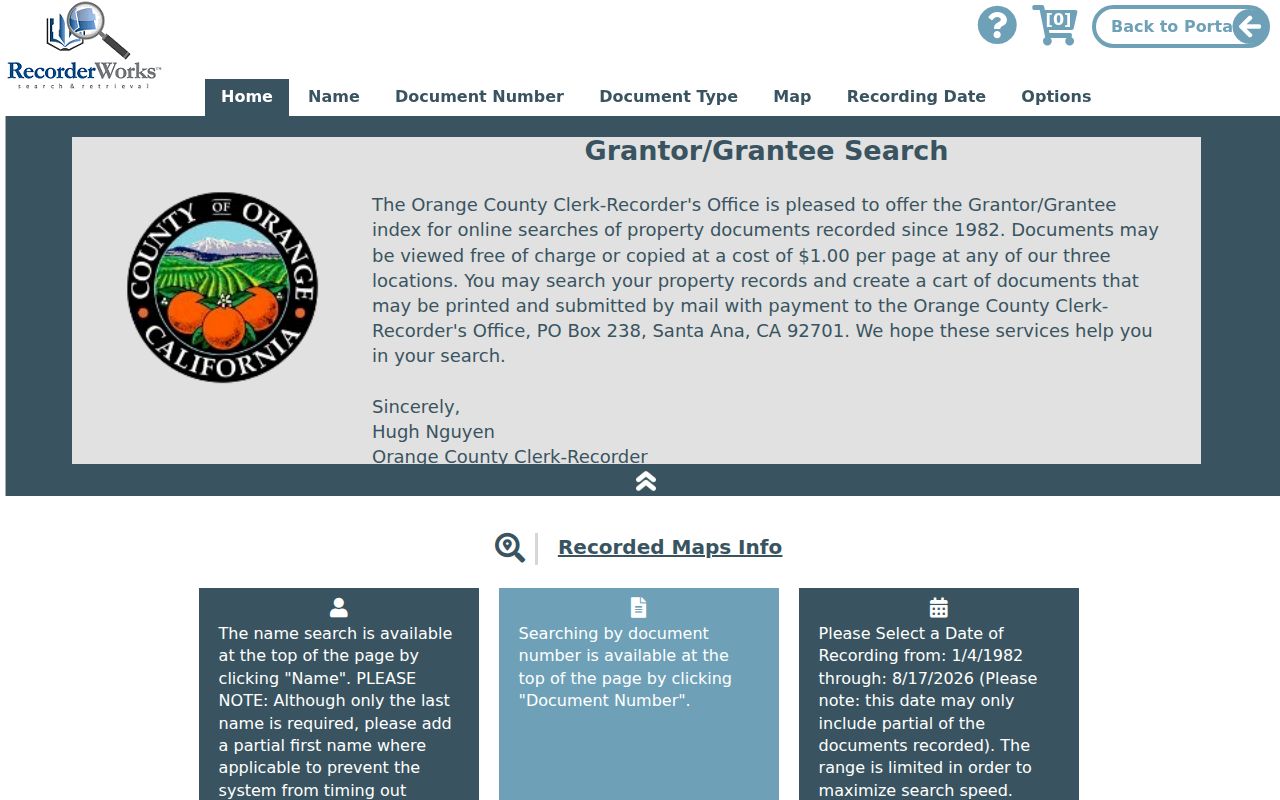
The index screen helps locate an identifier. Only the ordered instrument supplies the full vesting and land description needed for a backward trail.
The official-records forms page is the next access step when a copy or restricted document form is needed.
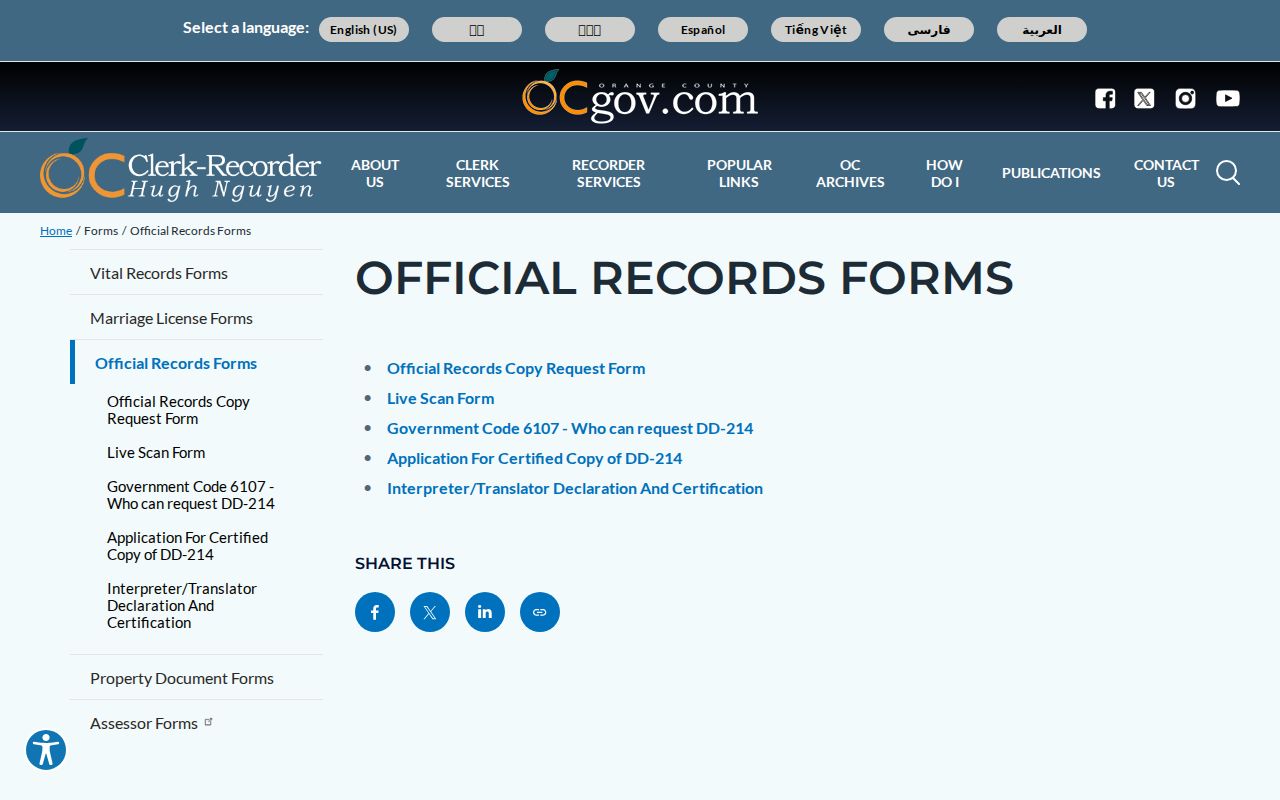
The form route clarifies how to request an identified document. It does not replace the name and parcel research that supplies the identifier.
San Clemente Directory Years and Census Snapshots
The National Archives confirms Orange County city directory volumes that include San Clemente in 1926, 1929, and 1931. Those years sit close to the town's 1925 planned-community beginning, 1928 incorporation, and 1930 census. A directory can provide a name-to-address snapshot; a census can provide an enumerated household and relationship clues. Neither one is a complete or continuous list.
For an address history, find the name in 1929, compare the 1930 enumeration, and check 1931 if the volume is available. Search initials, spouse names, occupational clues, and historic street wording. A missing appearance may be a publication gap, a move, an unlisted household, a spelling difference, or a changed address. Pair the entry with a deed, permit, newspaper, obituary, or probate result rather than filling the gap by assumption.
The historical directory shelf is described in the San Clemente city directory collections page. This previous residents workflow uses those collections for the address trail and leaves their catalog detail there.
Read the March 1929 Sanborn Footprint
San Clemente's official Historic Structures Survey cites March 1929 Sanborn Insurance Maps. The documented sheets show a local commercial and civic landscape with a grocery, drug store, cobbler, bank, plumbing shop, bakery, auto repair, beauty shop, billiard hall, restaurants, and hotels. The maps can place a structure, lot, use, or street label beside an early directory entry. They cannot name every occupant.
Use the City survey to verify the March 1929 reference and the Library of Congress guide to understand catalog fields and digitization limits. Compare footprint, adjacent uses, lot or block, and street wording. Then connect that place to the APN, legal description, deed, or later permit. A Sanborn map is a structure companion to a previous residents search, not an address roster.
Historic bridge. When a modern address does not match an old map, preserve lot, block, tract, footprint, and adjacent names instead of inventing a renumbering event.
Use San Clemente Permits to Date Changes
Permits help explain when a property changed shape, use, or construction status. San Clemente's permit instructions say to request “permit history” by street address and to specify permits, inspections, square-footage notes, builder, contractor, or plans. eTRAKiT supports anonymous general property, permit, project, and map searching; detailed records and transactions require account access. Applications can also use in-person or emailed PDF channels.
Community Development lists 949-361-6100 for help and 949-361-3366 for inspections. Plans and blueprints require a public-records request. When an older address history is not in the portal, use the City Clerk's CPRA route and name the address and date span. A permit applicant or contractor can be a useful identity clue, but it is not proof that the person occupied the property.
A permit date is best paired with a directory, census, deed, obituary, or probate event. It dates a physical change; it does not date every move.
Close a San Clemente Trail with Obituaries and Probate
When a prior name disappears, an obituary or probate case can supply the next place, relatives, or estate connection. OCPL's obituary guidance points to the California Death Index 1940-1997, Social Security Death Index, NewsBank and Orange County Register material after January 1, 1987, plus branch assistance. Orange County Superior Court's probate index can identify a decedent, petitioner, representative, name-change matter, or other estate clue, subject to sealed and redacted material.
Start with the known address and name. Compare the obituary's date, spouse, relative, place, and occupation with the directory or deed. Then use the probate case number or vital-record channel for confirmation. An obituary is a lead, and an estate party is not necessarily a former occupant. Relationships need a source that actually states them.
California DOJ's public-record guidance explains the request path when a relevant county or city record is not online.
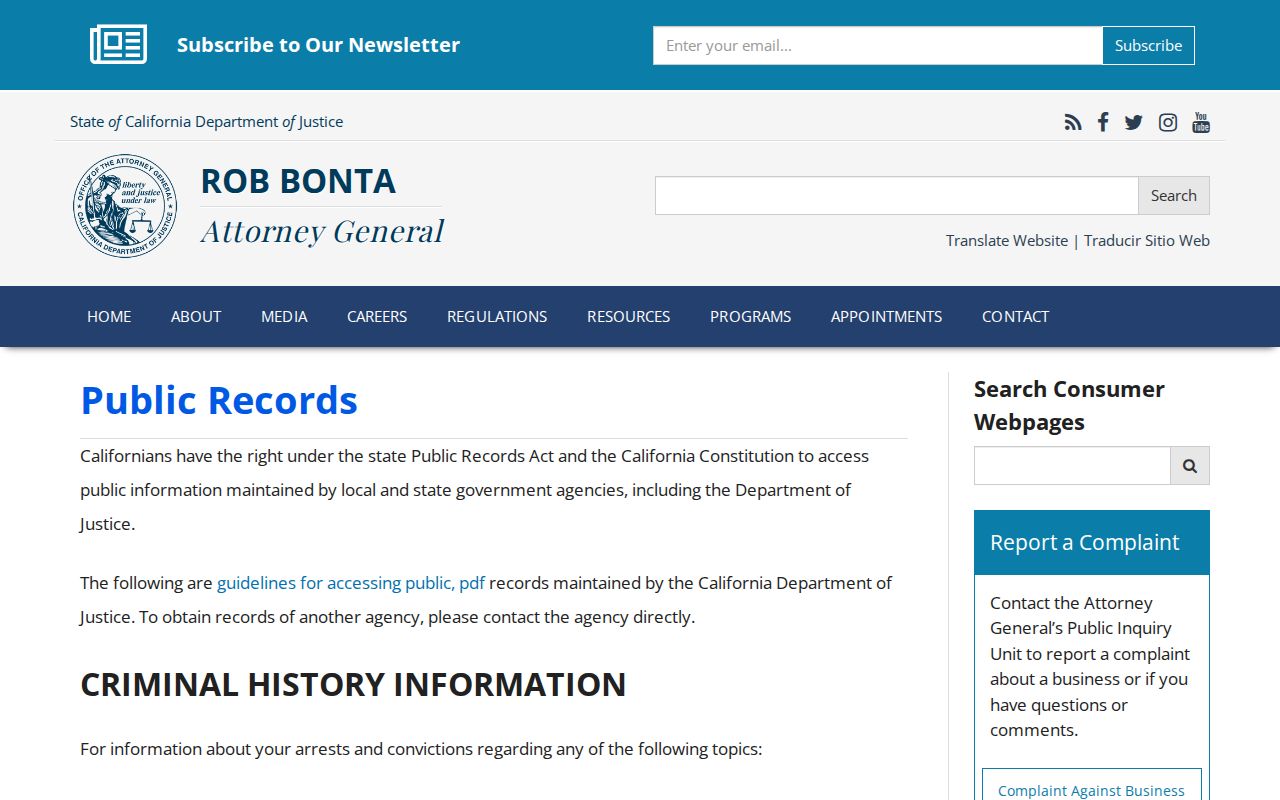
A public-record request should identify an existing file, custodian, date span, address, or record number. It should not ask an agency to conduct a custom genealogy investigation.
Bridge San Clemente Address Changes with Legal Description
No official source reviewed verified a citywide street-renumbering year for San Clemente. Older records may abbreviate Avenida, Calle, Camino, or Via, and planned tracts can use names that do not fit a simple grid. Preserve the old wording, compare the map footprint and adjacent parcels, and use tract, lot, block, legal description, and APN to test continuity.
ZIP codes cannot solve a pre-1963 address problem. A 1926 directory or 1929 Sanborn map predates ZIP Codes, so its reliable bridges are land description, map, owner sequence, nearby names, building form, and later permits. Do not force an early street into 92672 or 92673 as if the postal label existed at the time.
- Situs
- The physical location of the parcel or improvement.
- Mailing address
- The destination used for tax or other notices, which may be elsewhere.
- APN
- The assessor parcel number that links the parcel to County property systems.
- Instrument
- A recorded document such as a deed, lien, easement, or trust-related filing.
Ask Archives and Library When the Web Stops
Orange County Archives, the San Clemente Library, and the Historical Society provide the fallback chain for previous residents. Archives holds historic county property material, directories, newspapers, maps, photographs, and many pre-1960 records. OCPL supplies microfilm, digital newspapers, genealogy databases, and staff routing. The Historical Society, founded in 1973, reports more than 400 historic photographs dating as early as 1925 and maintains local-history resources, although access appointments and item-level finding aids must be confirmed.
Ask for the exact volume, year, box, image, or property file. The City survey's March 1929 Sanborn reference and NARA's 1926, 1929, and 1931 directory list give a precise starting point. For a private family document, the OC Memory Lab can preserve a scan, but it does not make the material a public resident record.
San Clemente Copy Scams and Fraud Notices
Property-history research can attract mailers that copy public deed facts and charge a large fee for a document obtainable from the official Clerk-Recorder. Check the instrument number, copy fee, and office domain yourself. Orange County's title-recording courtesy notices are free and automatic when a document affecting title records. They are not a paid subscription or a reason to click an unsolicited link.
The County real-estate-fraud alert guidance explains the program and reporting context. A suspicious title event can be reported to the Orange County District Attorney's Real Estate Fraud Unit at REFraud@ocdapa.org. Preserve the envelope, document number, payment request, and date, while minimizing any sensitive personal information.
The source image below is a fraud-reporting and public-record context cue, not a claim about a particular San Clemente property.
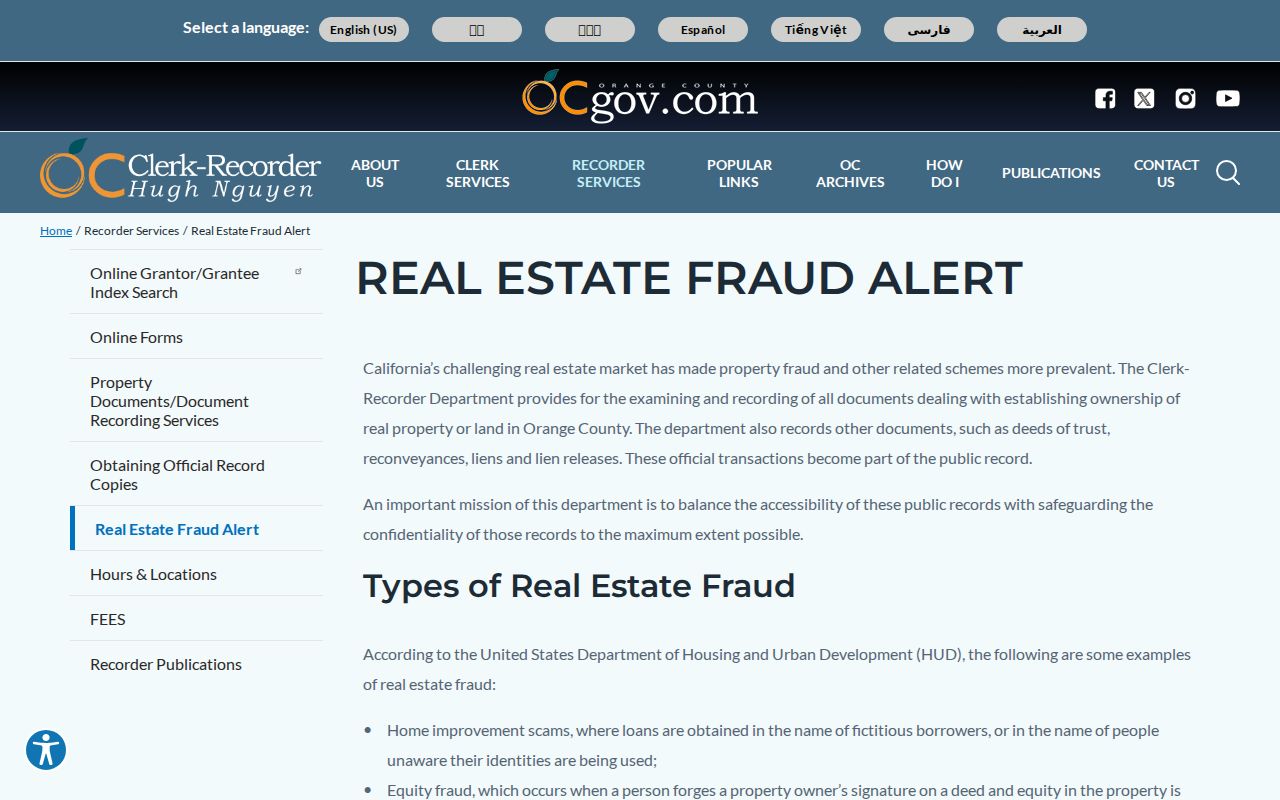
Verify a deed or copy with the custodian before paying, relying on a mailer, or treating a recorded name as a current resident.
Limits on a San Clemente Previous Residents Search
Ownership and residence are separate propositions. A deed can name a recorded party, a directory can list a household, and a census can enumerate people at one time. None promises every prior occupant. Missing records may reflect publication gaps, unlisted households, name variants, changed streets, confidential data, destroyed records, or a person who left no owner-indexed trail.
Lawful house history. Use prior-resident research for family history, preservation, property history, and civic understanding. Do not use names, addresses, or record clues to stalk, harass, intimidate, or harm anyone.
State the evidence precisely: “the 1929 directory lists,” “the deed records,” “the 1930 census enumerates,” or “the permit names.” That wording keeps a San Clemente address history useful without overstating what the source can prove.