
Start a San Clemente Residents Directory Search
Every resident search works best one way. Start with the record that answers the real question. An address points to San Clemente property, tax, permit, and map sources first. A full name points to the Orange County recorder index and the court name search. It also opens vital-record rules, license systems, and older newspapers. Family-history questions may travel a different road entirely. A city directory, obituary, census schedule, probate file, or historical photograph often beats a current roll. That kind of hunt rewards exactly those sources.
No single source lists every person at an address. A deed names the parties to a recorded instrument. An assessment record pins down a parcel and its roll data. Voter products carry special access rules. The self-service status form serves the individual voter alone. A directory or census gives a dated snapshot. Treat each result as one piece of evidence. Then compare a second fact. Try an address, date, spouse, business, parcel, or case number.
- Write down the known name, former address, approximate era, relationship, or parcel clue before searching.
- Use the Orange County tax or map route to turn a San Clemente street address into an APN when land is part of the question.
- Search the relevant name index, court category, license board, vital-record channel, or city archive rather than treating one portal as a universal roll.
- Use the library, Archives, and historical collections when a printed year or older household matters.
- Request an existing record from the correct custodian when a portal is incomplete, and save the query date and record identifier.
San Clemente Records Offices by Question
San Clemente records split three ways: city, Orange County, and California. The City Clerk at City Hall is the practical starting point for municipal records and permits. The same office handles public requests and published reports. County offices in Santa Ana hold the deeds and vital records. They also cover assessment work, taxes, Archives material, and Superior Court files. The South County Clerk-Recorder branch in Laguna Hills sits closer for eligible vital-record service. The Assessor also runs a South County counter in Mission Viejo.
Office boundaries matter more than people expect. A city request cannot make the County produce a deed. A CPRA request sent to the wrong agency will never pull another custodian's file. The San Clemente public-records request channel covers city-held material only. For recorded instruments, begin with the Orange County Grantor-Grantee Index. Then use the county copy route once an identifier is known.
Orange County Clerk-Recorder
601 N. Ross St., Santa Ana
714-834-2500
Clerk-Recorder services
Orange County Assessor
500 S. Main St., 2nd Floor, Orange
714-834-2727
Property information and maps
San Clemente City Clerk
910 Calle Negocio, San Clemente, CA 92673
949-361-8200
City Clerk department
The County Clerk-Recorder service map draws a clean line between official records and other services. Birth, death, marriage, fictitious-business-name, and registration services each sit in their own lane. Court records belong to the Orange County Superior Court, not the recorder counter. Records map: city permits and CPRA requests answer municipal questions. County deeds and taxes answer land questions. Court and probate answer case questions. California systems handle voter status, licenses, privacy programs, and statewide certificates.
San Clemente's APN Trail from Address to Name
An APN is the assessor parcel number, an eight-digit key for one taxable parcel. It bridges a street address, a tax record, a map, and later deed research. The official Orange County secured-value search accepts an APN, never an owner name. For an address-first search, use the County Treasurer-Tax Collector's tax search or parcel map route. Record the APN. Then open the Assessor page.
The public Assessor result stays deliberately narrow. Owner-name searching is not allowed on the official page, and the owner name is omitted. Displayed values reflect the January 1, 2026 annual roll closure. So a figure is an assessment snapshot rather than a live transaction record. The page links ParcelQuest as an outside property-data service. Its current fields and free-versus-paid tiers are set by that vendor, not the County.
| APN | Text field; required; exactly eight numeric digits. |
|---|---|
| Submit | Button that runs the secured-value query. |
| Owner name | Unavailable on the official public result; the County bars owner-name searching. |
| Street address or ZIP | Unavailable on this form; translate the address to an APN through the tax or map route first. |
- Roll
- A dated assessment or tax listing for parcels and their taxable details.
- Index
- A finding aid that points to a record or instrument; it is not the complete document.
- Criss-cross directory
- An address-first or street-order directory section, when a publisher included one.
- Parcel
- A mapped unit of land identified by an APN, with a situs and legal description.
The official Assessor property-information gateway explains the ParcelQuest handoff and the public-counter option. The official page shows the same narrow path the San Clemente residents directory uses when a street clue must become a parcel clue. The full address chain appears in the San Clemente street directory.
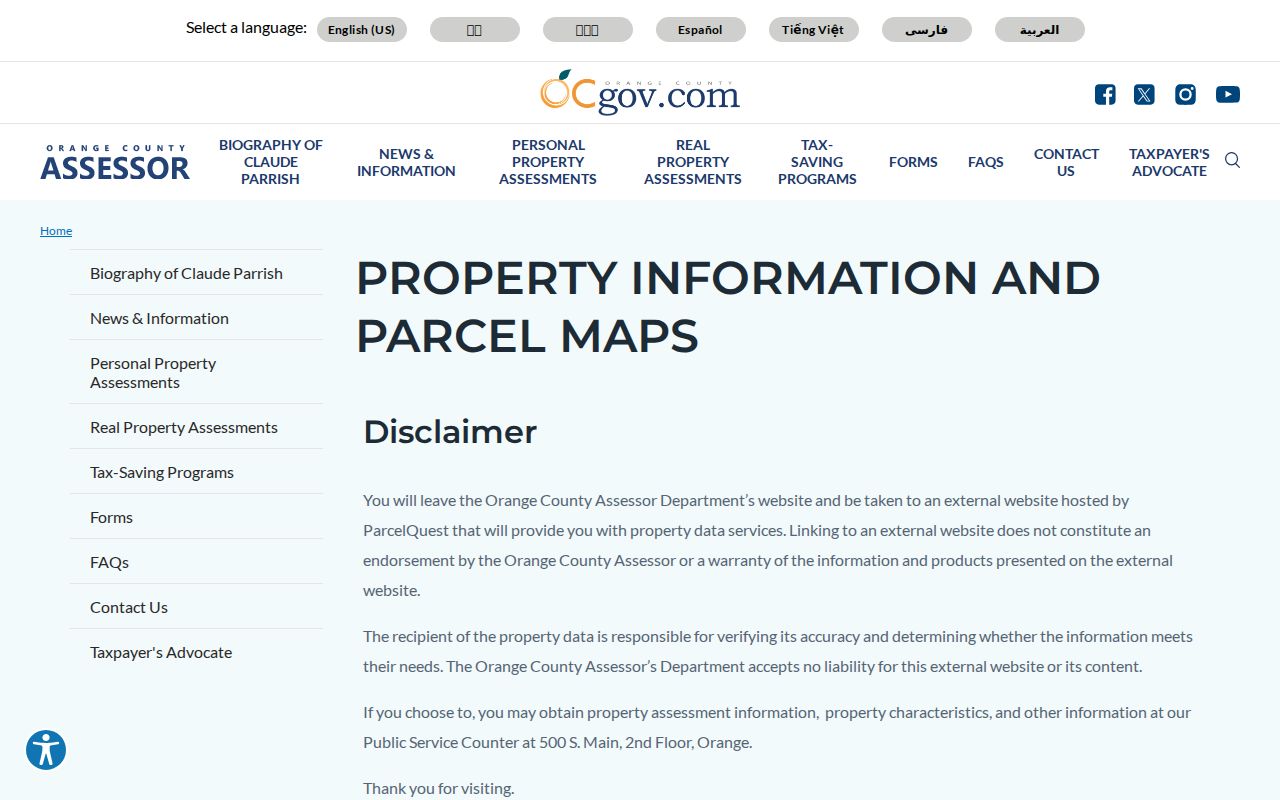
The image checks the official property-information route. It proves no owner or occupant. Keep the APN, situs, legal description, and roll date separate from later residence evidence.
What the Orange County Recorder Index Returns
RecorderWorks works as a name-based grantor-grantee index. Pick all roles, grantor, grantee, or both. Then type a surname before a given name, like smith allison. Narrow the window with recording dates. Beyond names, the index accepts a document number, recording date, document type, or map. It also takes book and page, legal description, or parcel number. Deeds, quitclaims, easements, liens, reconveyances, covenants, maps, and death reports can all appear. Any of them can tie a person or entity to a parcel. Treat the index as a finding aid, though, not a full resident record.
Instrument images do not appear in the live index. To order a copy, pull the document number and recording date first. For 1982-forward material, the copy instructions call for the year plus a six-digit instrument number. Pre-1982 requests should add book, page, and instrument number whenever those exist. Pages run $1 each, with another $1 to certify any document or map. Staff will not run the name search for you. Not by phone, mail, or at the counter.
Pair the RecorderWorks interface with the official Clerk-Recorder service map. Add the official copy instructions too. A result can show an indexed party, document type, date, or number. It may also show book and page, map, or parcel reference. It will not show a sale price, a current residence, or household members. Nor does it settle the full legal effect of a transfer.
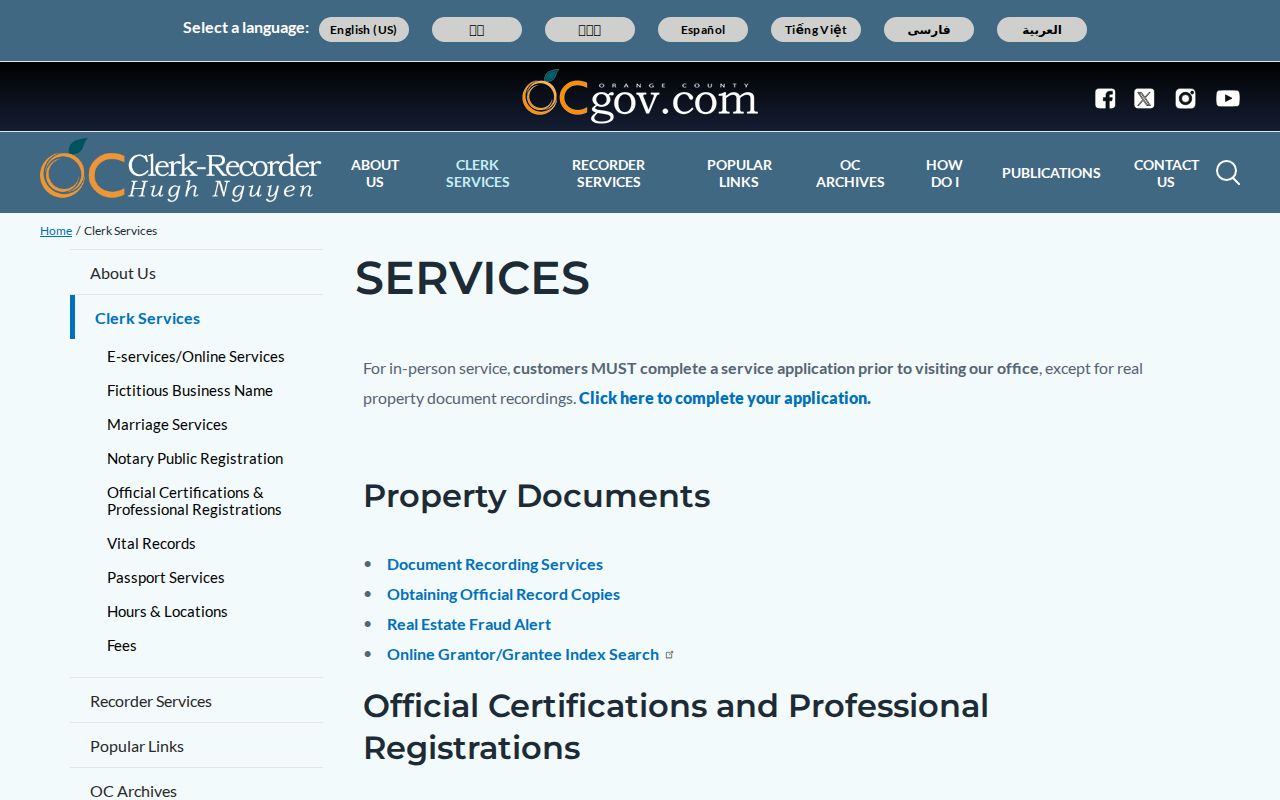
The Clerk-Recorder service map keeps the index separate from copy, vital, and other clerk services. Read the instrument itself before labeling an indexed party a current owner or a San Clemente resident.
- Party and role: the indexed name and whether the person appears as grantor, grantee, or both.
- Instrument clue: document number, recording date, document type, book/page, map, legal description, or APN mode.
- Copy path: the identifier needed for a mail or counter request after the search is complete.
- Boundary: no free image view, no staff-run search, and no automatic proof of current occupancy.
Current San Clemente Resident Sources
No single roster exists. A current San Clemente residents directory is really a set of narrow sources. You read them side by side. The County property route tracks parcels and assessment, not households. California My Voter Status is an authenticated lookup for one individual. City permits and licenses surface an applicant, contractor, business location, or project. Unclaimed-property results link a name to a reported last-known city or ZIP. A public staff directory ties a name to an official role. Each source answers to a different keeper. Each carries its own reason a name appears.
| Source | What It Can Add | Keeper | Access Boundary |
|---|---|---|---|
| APN and assessment route | Parcel, situs, assessment and exemption snapshot | Orange County Assessor | APN-only official search; owner omitted |
| Recorded-document index | Parties to deeds, liens, maps and related instruments | Orange County Clerk-Recorder | Free index; copy request for the instrument |
| My Voter Status | An individual's registration and election information | California Secretary of State | Identity-authenticated; not a public browse list |
| City permits and licenses | Address, project, applicant, contractor or business connection | San Clemente | Published reports, eTRAKiT, or focused request |
| Unclaimed property | Reported owner name with optional city and ZIP clues | California State Controller | Free search; not proof of present residence |
Different questions need different routes. Check any promising lead against the original custodian, and keep an aggregated profile clearly apart from a citable record identifier.
| Route | Strength and Boundary |
|---|---|
| Official public source | A named custodian, record identifier, access rule, and date make the result citable. It may still be narrow, stale, redacted, or limited to a party or parcel. |
| Commercial people-finder category | An aggregated profile may be quick but can blend stale public data, unclear provenance, paywalls, and opt-out conditions. Treat it as a lead only and verify through the original custodian. |
The California unclaimed-property search asks for a last or business name, or a Property ID. First name, city, and ZIP stay optional. Results reflect a reported owner and stale contact data. So the tool works as a namesake lead, never as proof of where someone lives.
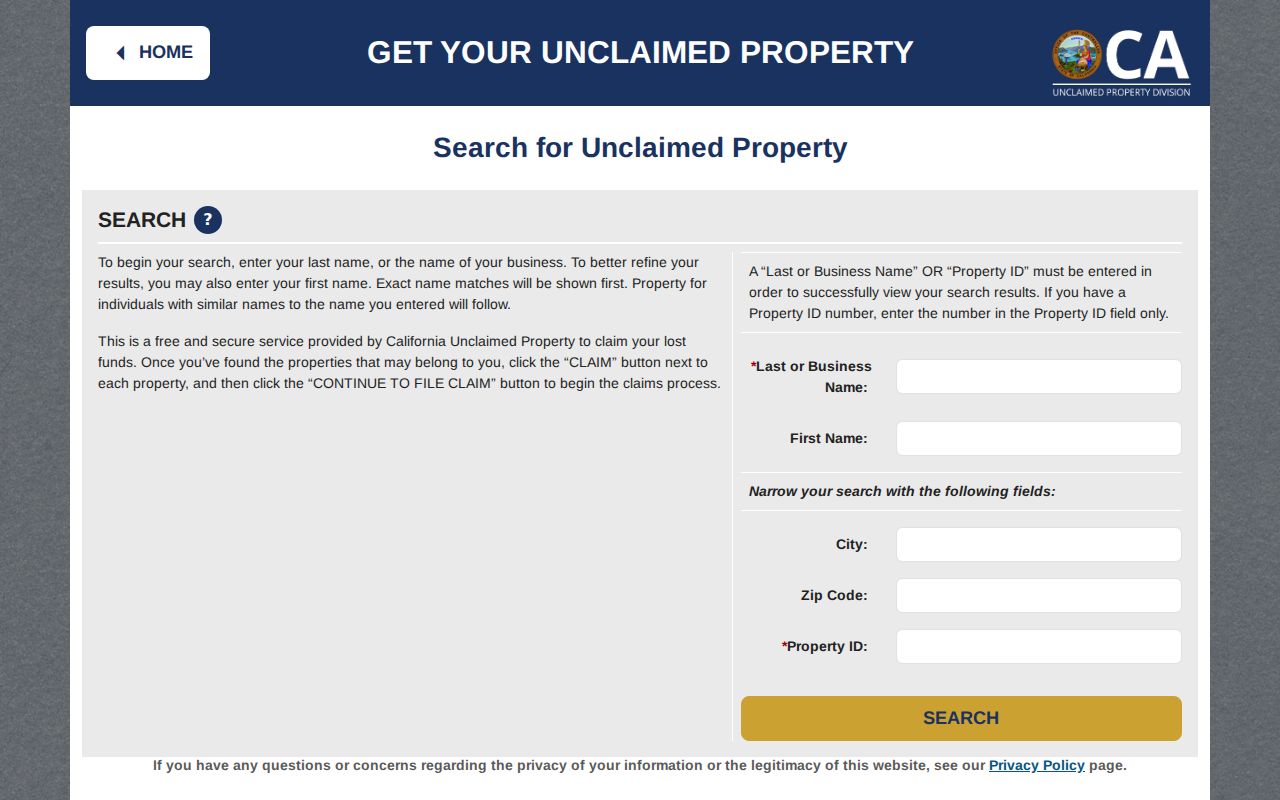
The official search screen offers a ZIP or city filter. It can narrow a common name without proving a current address. Take the custodian's result fields exactly as written. Two state tools add professional or business context. California's Department of Consumer Affairs runs a license search, and the Secretary of State offers bizfile Online. Both help corroborate an identity. Still, an address of record, registered agent, or business location is not automatically a home.
A business filing can back up a name match when its entity number, date, and local license all point to one person. Keep it labeled as an affiliation record, nothing more.
San Clemente Permit and Property History
San Clemente's Community Development trail is keyed to addresses. The eTRAKiT portal allows anonymous general searches across property, permits, projects, and maps. Detailed records and transactions need an account. The City's permit instructions say a focused request should ask for the property's "permit history." It should also name the desired permits, inspections, square-footage notes, builder, contractor, or plans. Those details explain when a structure changed and who did the work. Just remember that an applicant or contractor is not necessarily a resident.
The online portal is not the only channel. Applications can go through eTRAKiT, in person, or as an emailed PDF. Community Development lists 949-361-6100 for help and 949-361-3366 for inspections. The Building counter runs split morning and afternoon service on published weekdays. Question-only service comes later, with earlier last walk-in times. When a history runs old or a plan is not online, use the City's CPRA request route. Name the address and the date range in that request.
- Search the complete San Clemente address in eTRAKiT and note the permit or project number.
- Separate the site address from the applicant, owner, builder, architect, and contractor fields.
- Ask the City for an existing permit history, inspection record, square-footage note, or plan by address and date span.
- Use the City's NextRequest portal to submit and track a focused request.
The NextRequest capture shows the municipal request route rather than a resident roll.
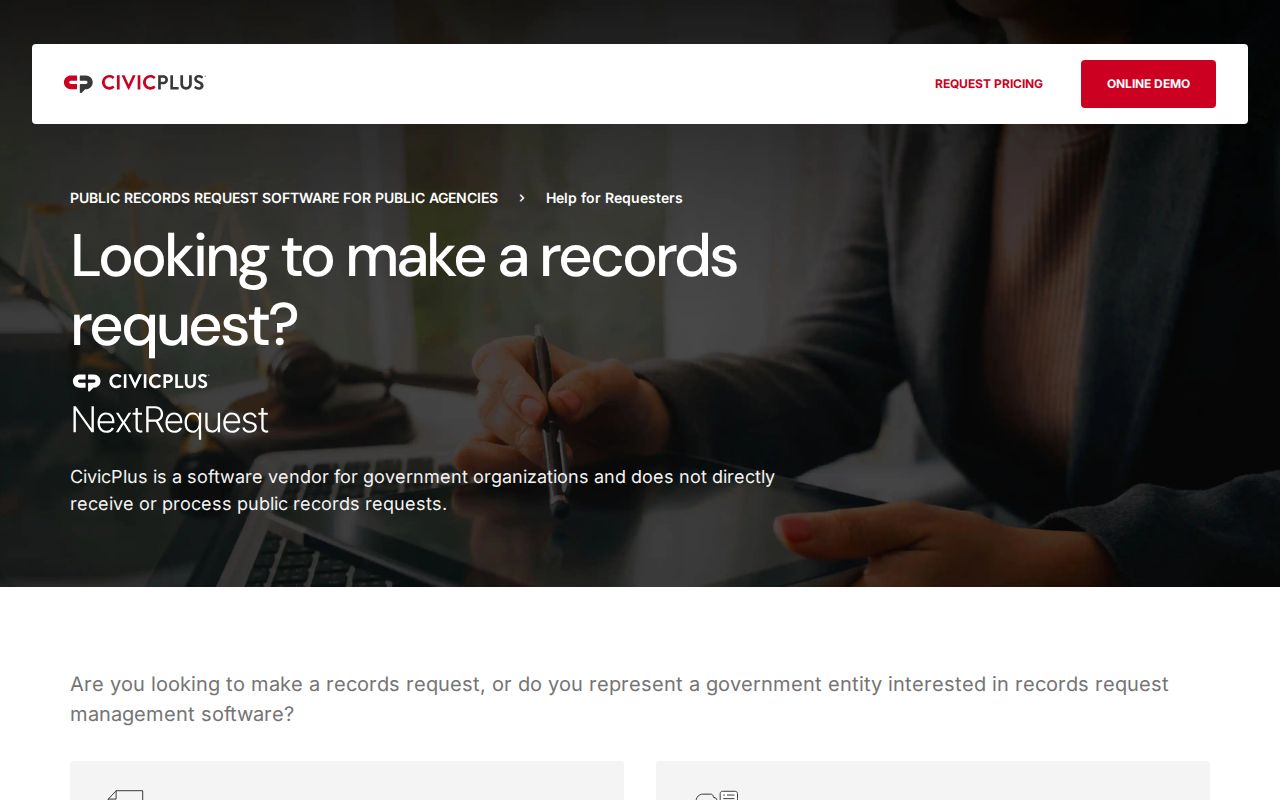
The City publishes monthly reports of its own request activity. Those can show how a researcher describes an address or APN, but they never replace the underlying record.
California Voter Data and San Clemente
My Voter Status is a self-service form, not a public San Clemente residents directory. It wants a first name, last name, date of birth, and either a California driver-license or identification number or the last four digits of a Social Security number. A successful lookup can return registration status, party preference, polling or vote-center information, and election details for that one authenticated voter. A failed match may simply reflect a name change, pending registration, a spelling slip, or incomplete input. It never proves that someone else is unregistered.
California Elections Code §§2188 through 2194 govern wider file access. An approved file can carry name, residence and mailing address, precinct, registration dates, status, party preference, and participation method. Distributed files exclude driver-license numbers, identification numbers, Social Security digits, unique identifiers, and signatures. Safe at Home participants and protected officials get special handling. Commercial use and casual republication are off limits.
- First and last name: required text fields for the registered voter.
- Date of birth: required date field used with the identity check.
- California DL or ID: one permitted identity choice.
- Last four SSN digits: alternative identity choice when the California DL or ID is not supplied.
The California voter-status portal is the source for an individual's own lookup.
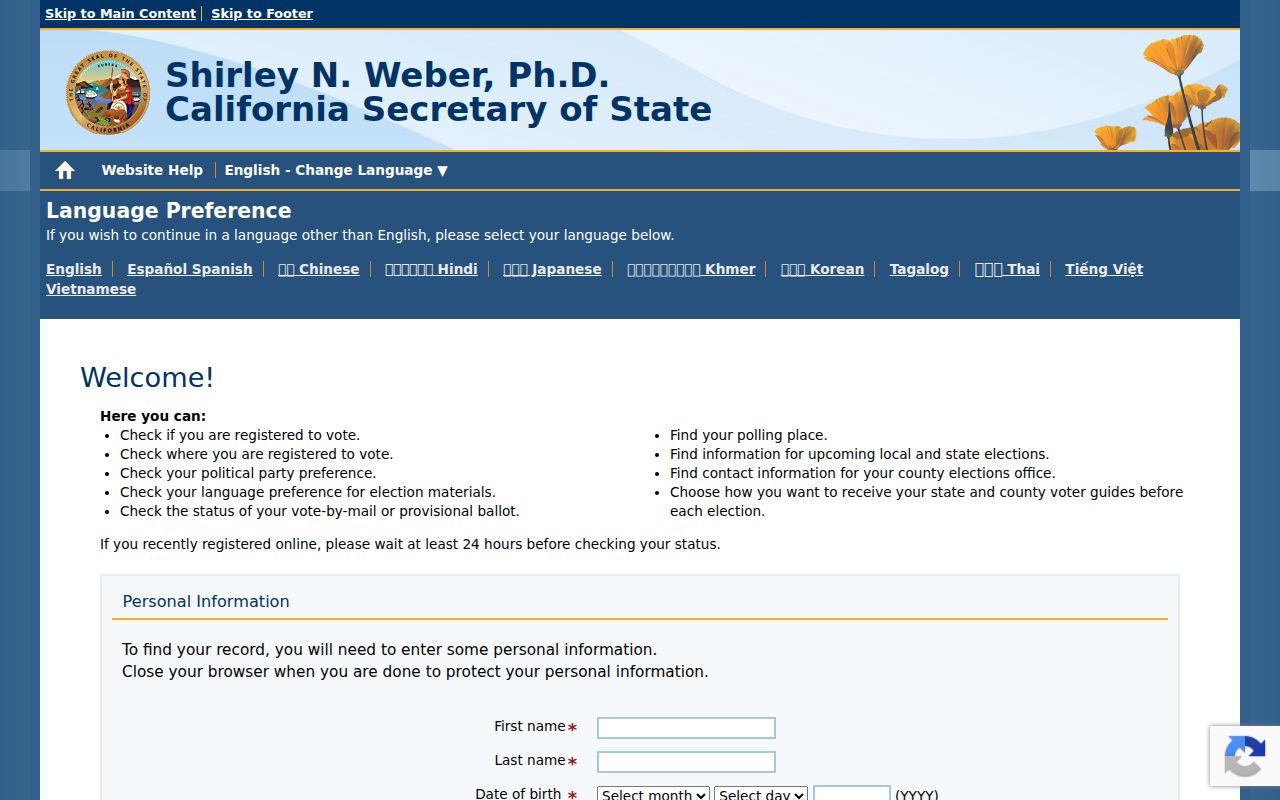
Orange County also sells approved products. They include a standard voter file, a street index, and specific-voter requests. Each one requires a signed application, a permitted purpose, payment, and supporting documentation, so the self-service screen and the approved file process remain different tools.
Verify a San Clemente Name in Court and Vital Records
San Clemente operates no municipal court index of its own. Its cases route to the Orange County Superior Court. Its dockets span civil, criminal, traffic, family law, probate, and small claims. A name search can surface a case number, a category, and indexed parties. It can also show events, status, a calendar, or a path to public documents. Same-name collisions are routine here. Pair the name with a filing date, party role, counsel, case type, or a related record. Juvenile, adoption, sealed, and confidential material stays off-limits. That second detail is what turns a hit into an identity.
- Orange County case name search: party, category, case number, and public status; retention and visibility vary by county and case type.
- Probate index and file: decedent, petitioner, representative, heirs, or interested persons; some filings are redacted, sealed, or unavailable.
- Orange County vital records: birth, death, and public marriage events registered in the County; authorized and informational copies follow different rules.
- CDPH Vital Records: statewide certificate ordering, including births from July 1905 forward; processing, eligibility, and certificate type matter.
Divorce decrees live at the Superior Court. The Clerk-Recorder never holds the full decree. For a birth, death, or public marriage, begin with the Orange County vital-record channel when the event was registered there. Then weigh the statewide route if anything seems inconsistent. The court access gateway is a far better first test of case identity. It beats a bare name claim. Together these sources anchor a San Clemente residents directory check that has to hold up.
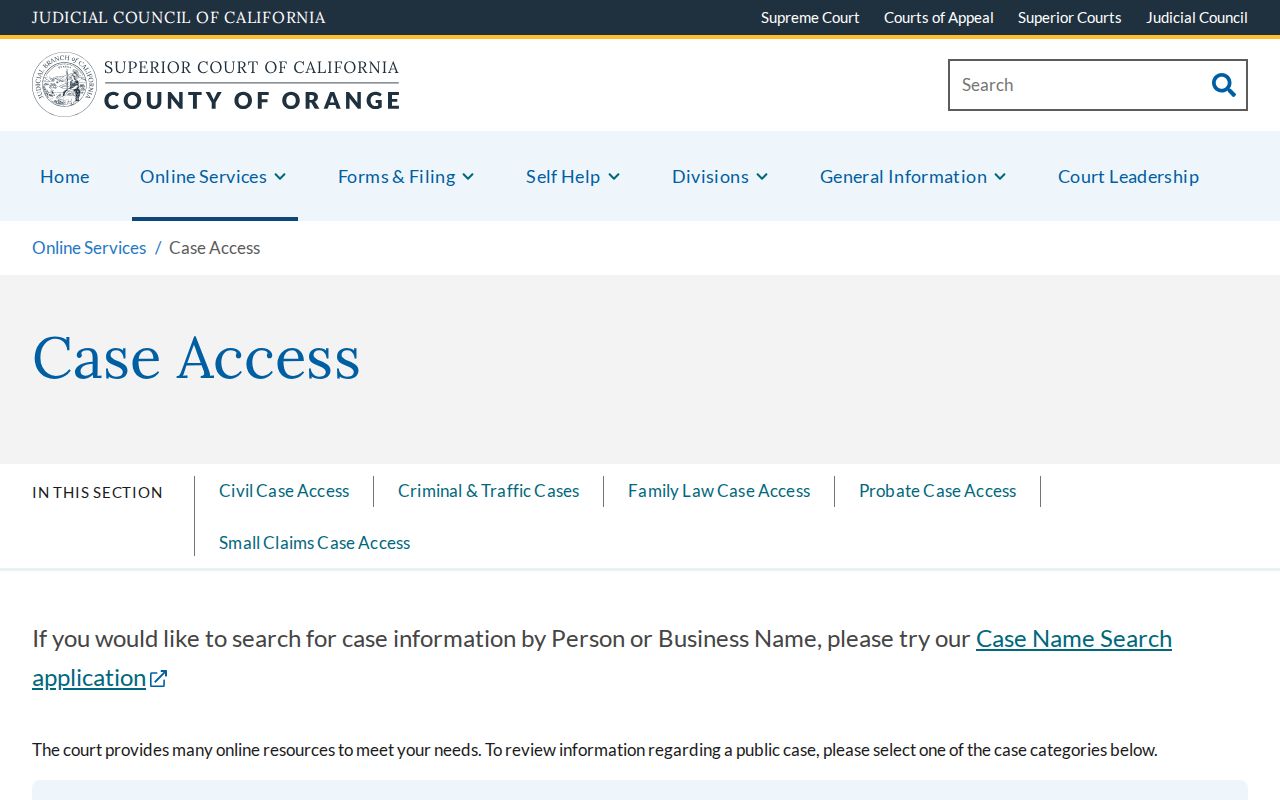
Orange County court records reach back to 1898, though retention varies and the newer documents are the ones most likely to appear online. A docket hit is not a certified file.
San Clemente Family and Heir Research
Family research in San Clemente leans on records that were never meant as current people lists. An Orange County probate case can tie a deceased owner to a petitioner, a representative, or an heir. A library obituary search can explain why a name drops out of a residents directory and name surviving relatives or a later town. Yearbooks, local newspaper notices, and the Orange County directory volumes of 1926, 1929, and 1931 add time-stamped context. Adoption records stay confidential. Adoptee or birth-parent searches belong in California's official adoption-information channels, not an improvised public-record sweep.
The local library holds newspaper microfilm and fiche. OCPL's obituary guidance points to the California Death Index 1940-1997, NewsBank, the Orange County Register after January 1, 1987, and staff assistance. Its digitization lab offers free reserved sessions for family documents, photographs, film, tape, and audio. That lab preserves private evidence. It creates no public resident roll.
- Use a directory or yearbook to establish a name and era.
- Use a newspaper or obituary to test family relationships and a later location.
- Use probate, vital, deed, or license records to corroborate the identity.
- Keep a citation for every image, page, case, or database result.
The California license search publishes professional details such as license type and status. An affiliation there helps separate namesakes, but it never proves a San Clemente residence.
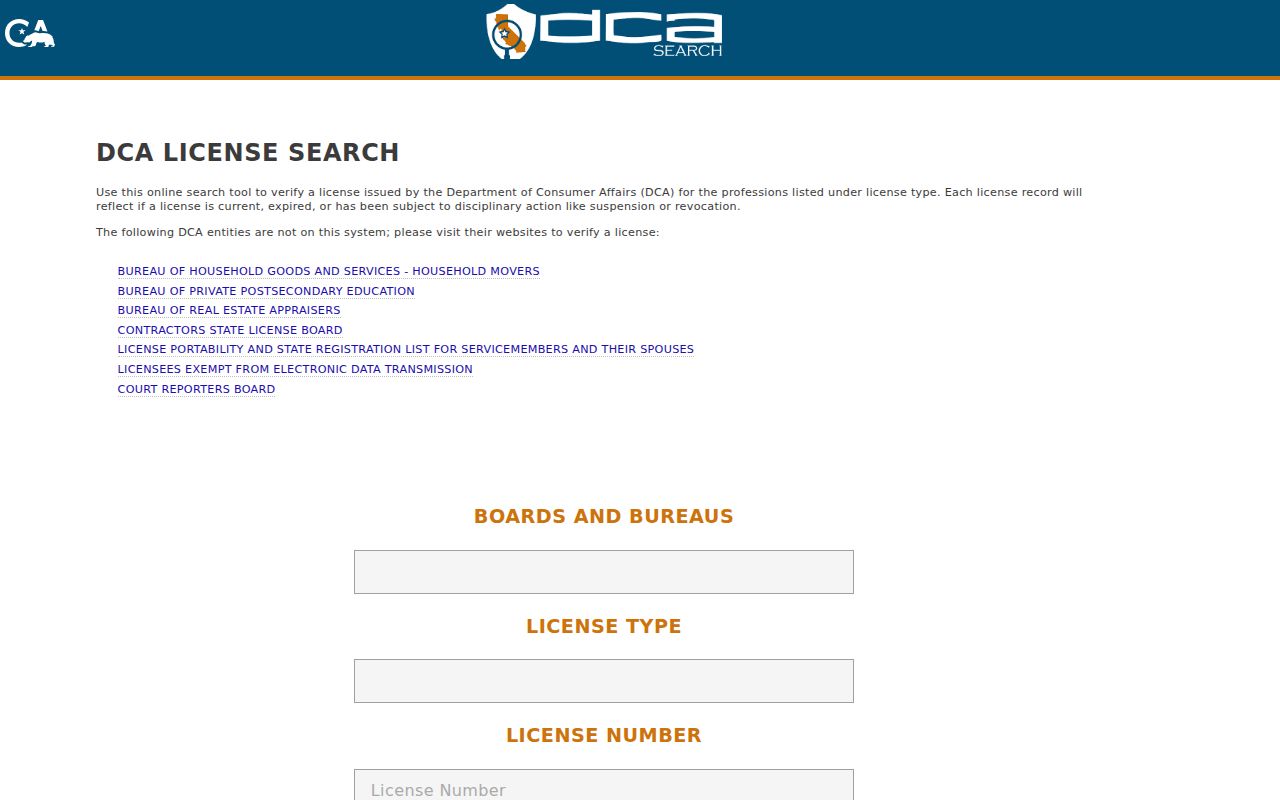
Match any license result to an independent fact first. A shared date, business, case, or family detail is what establishes the same person in a residents directory context.
Protecting a San Clemente Address
California's privacy tools each do different work. The California Consumer Privacy Act, as amended by the California Privacy Rights Act, gives covered consumers rights of access, correction, deletion, and opt-out over business-held data. Exceptions apply. The state's DROP platform sends one verified deletion request to every registered data broker. Those measures can shrink private compilations. They cannot erase a lawful Orange County deed, court file, or other source record.
Safe at Home, under Government Code §§6205-6216, provides a substitute mailing address. It serves eligible victims, certain household members, and qualifying reproductive-health-care participants. A participant should use the program's special voter-registration route. Call 877-322-5227 instead of the ordinary online form. The program does not physically hide a home. It also cannot remove every earlier public copy. For a suspected unlawful recording, contact the Clerk-Recorder. Provide the document number and the statutory basis for a redaction request.
Lawful personal use. San Clemente records are for focused, lawful research such as family history, civic review, reconnecting, or checking a transaction. Do not use names, addresses, or record clues to stalk, harass, intimidate, or harm anyone.
California's Driver's Privacy Protection Act limits what DMV personal information can reveal. Elections Code protections restrict voter-file disclosure in parallel. A public record result is not an invitation to rebuild a private household profile, so keep sensitive details out of any citation and verify the protected-address rule with the custodian first.
San Clemente ZIP Geography and Record Eras
ZIP codes sharpen a San Clemente search. They prove neither a city boundary nor a person's residence. ZIP 92672 generally tracks the original coastal village core. ZIP 92673 reaches the northern and northeastern areas, including Rancho San Clemente and Talega. Some city planning datasets borrow 92624 when approximating city limits. That postal area actually belongs to Capistrano Beach and Dana Point. Confirm the exact address through USPS and city or county geography. Then move to the APN.
The old 92672 core and the newer 92673 tracts point to different record eras. Earlier streets surface in newspapers, directories, Sanborn material, and long deed chains. Later subdivisions tend to leave electronic permits, map, HOA, and tract records instead. Treat the ZIP as a sorting clue. The legal description, tract, lot, or APN is the continuity key.
- 92672: original town, Avenida Del Mar, coastal and central records; verify the delivery boundary and city jurisdiction.
- 92673: Rancho San Clemente, Talega, hillside and newer tract records; verify the exact address, parcel, and association boundary.
- 92674: legacy or PO-box clue in routing material; confirm the current assignment before treating it as a residential street ZIP.
- 92624: north-edge postal clue in some city datasets; confirm whether the parcel is in San Clemente or another jurisdiction.
Historical San Clemente Resident Directories
San Clemente's directory era begins near the town's planned-community origin. A federal archive list identifies Orange County volumes for 1926, 1929, and 1931. It expressly includes San Clemente. The 1926 volume can catch the settlement before incorporation. The 1929 book follows it. The 1931 edition sits just after the 1930 census. The run is countywide. Use the San Clemente locality heading rather than expecting a stand-alone city book.
County archives serve as the physical fallback for directories, historic newspapers, property material, and pre-1960 county records. The local library supplies newspaper microfilm and fiche. Confirmed runs from 1937-2021 and 1987-1989 are included. A Spanish-language title is available as well. A residents directory entry may list a name, spouse, occupation, and address. Some entries carry an owner or occupancy mark. Remember that an entry is a publication snapshot, not proof of continuous occupancy.
- Verified early volumes: Orange County directories for 1926, 1929, and 1931 with San Clemente included.
- Local newspaper shelf: confirmed local runs from 1937-2021 and 1987-1989, plus a title confirmed through library access.
- Structure companion: March 1929 Sanborn source cited by the City's Historic Structures Survey.
- Research caution: exact publishers, later annual runs, and reverse-directory holdings still require confirmation with the custodian.
The San Clemente directory book page has the details.
San Clemente Scam Checks and Fraud Notices
Scammers mine the same public records a residents directory draws from. A deed-copy mailer quotes your parcel address. It sells a pricey "profile" that the Clerk-Recorder's own copy route provides for far less. An unclaimed-property letter may demand an advance fee. The State Controller's search costs nothing. Some callers splice an obituary, a court name, or a street address into a fake emergency. Type the official domain yourself. Then call the office number it publishes, not the one in the letter.
Orange County's Clerk-Recorder sends automatic, free courtesy notices whenever a document touches your title records. That notice is never a paid subscription. Suspected property fraud goes to the Orange County District Attorney's Real Estate Fraud Unit at REFraud@ocdapa.org. Save the document number, the envelope, the call record, and the date. A portal may expose a protected address or sensitive identifier. Do not republish it just because it appeared.
Check the custodian first. Compare the claimed parcel, case, or unclaimed-property number with the official Orange County, San Clemente, California, or court source before paying or responding.